Showing posts with label Books. Show all posts

Thursday, August 18, 2011

Review: Olaf Stapledon's "Last and First Men"


A lot of people have criticized Stapledon's "Last and First Men" for having no characters, but that doesn't mean it has no characterization, because his characterization is of entire races and peoples. That's the ambitious sweep of Last and First Men, which gives us the entirety of human history, over 2 billion years worth.

Robert Bloch once described horror as a kind of mystery story where God is the detective. If that's true, then "Last and First Men" is a tragedy where the main character is the entire human race. Not just one human race, but several: in the enormous span of time the book glibly and speedily covers, the human race assumes many weird forms, some naturally evolved, but others as the products of genetic engineering (though that term is never used) by the previous race.

Here's my favorite part of the story, and it is not only one of the high points of the book but also typical of its storytelling, and based on this you can determine for yourself if the book is for you.

After the destruction of the earth and mankind moves to Venus, the Seventh Men develop, a carefree, child-like race of graceful fliers with arms that have batlike wings. Of all the races of humans, the Seventh Men emerge as the most sympathetic: the most content, pleasant-spirited…no matter what terror happened, the sheer exultation of flight made them forget their troubles.

After thousands of years, because of an environmental problem, many Seventh Men are born without wings. This crippled race are sent to do hard work, but as they're of a race psychologically made for flight, the flightless crippled race were bitter, angry sorts cooped in labs incapable of happiness, a race of miserly industrialists who clutter up every inch of watery Venus's land space with their factories, who over time vow to eliminate flight as a pointless, dead-end future.


The final conflict is an awful genocide, with the carefree flying men mowed down as they futiley attempt to escape enemies in speedier airplanes with machine guns. The last of the Flying Men were a slave race to jealous masters who ordered all winged infants destroyed.

The defiant rebellion of the last Flying Men ended in tragedy, as related here:

Their leaders, conferring together, saw clearly that the day of Flying Man was done, and that it would be more fitting for a high-souled race to die at once than to drag on in subjection to contemptuous masters. They therefore ordered the population to take part in an act of racial suicide that should at least make death a noble gesture of freedom. The people received the message while they were resting on the stony moorland. A wail of sorrow broke from them. It was checked by the speaker, who bade them strive to see, even on the ground, the beauty of the thing that was to be done. They could not see it; but they knew that if they had the strength to take wing again they would see it clearly, almost as soon as their tired muscles bore them aloft. There was no time to waste, for many were already faint with hunger, and anxious lest they should fail to rise. At the appointed signal the whole population rose into the air with a deep roar of wings. Sorrow was left behind. Even the children, when their mothers explained what was to be done, accepted their fate with zest; though, had they learned of it on the ground, they would have been terror-stricken. The company now flew steadily west, forming themselves into a double file many miles long. The cone of a volcano appeared over the horizon, and rose as they approached. The leaders pressed on towards its ruddy smoke plume; and unflinchingly, couple by couple, the whole multitude darted into its fiery breath and vanished. So ended the career of Flying Man.

In the middle of all this there are some outright fantastic bits of imagery, like for instance, an era when a subspecies of man devolve into baboons, or a weird speciation on the high-gravity of Neptune which forces men to all fours, one primitive race of quadrupedal men who have tusks and another quadruped human race hunts them to extinction for their ivory. The most nightmarish were the Fourth Men, a race of superintelligent, immortal and terrifyingly unsentimental, coldblooded and casually genocidal brains the size of Volkswagens.


Because there are different human species, and the book takes a lengthy "God's-Eye-View," the book does not concern itself with even the character of individual civilizations, but rather the character of entire races.

For instance, the God's Eye View reduces the history of our own race, the First Men, into a story about the conflict between our brutal, animal nature and our better and more civilized instincts. Just when one is about to be prominent, some accident of history results in the other side of our nature taking over.

The person giving us this story is a being of tremendous intellect billions of years in the future. I was absolutely dreading this, because an author's true philosophical and personal views are ironically, never more on display when they try to write a person above human understanding giving a comment on modern times – these beings may be above human limits in thinking, but their writers sure aren't. That is, 19th Century novels with characters of this type always come off laughable because their "like unto an amoeba" beings are still tight-assed 19th Century people to the eyes of modern readers.

In fact, it's often difficult to read for this reason, of all things…the Bible…and not come away with the idea that God is a cruel and vindictive bully. But then, what do you expect from Bronze Age nomadic cultures?
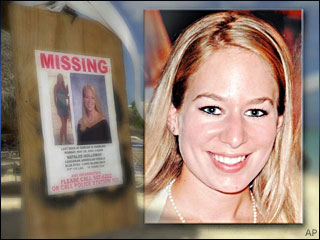


In "Last and First Men," sometimes this perspective works and sometimes it doesn't. It was written at an interesting time in history, when the Western neurosis about sex was obvious for what it was and actually could be talked about. A gigantic world war between France and Britain for instance, began again when a beautiful young Princess was the victim of an airplane accident, which brought from the British a cry for revenge against the totally innocent French. In essence, the sensationalist press used sexual imagery to create fear and a desire for aggression and revenge, in much the same way "missing white women" are overhyped in Fox News and other media.


The idea this kind of primitive sexual fascination is a really a primeval rage trigger-instinct would never have occurred to a Victorian mind, and is often invisible to easily provoked people today; it does sound like an observation a more intelligent being from the distant future would make.


Then again, there was the usual Brit science fiction stuff about how a world dominated by Americans (by 1932 a foregone conclusion) would be awful, cultureless and money-mad. This is a British Isles prejudice as petty as their nursery-hatred of Catholics, which I can't imagine any superior mind from the future ever subscribing to – it's bleed over into the character from the author, the literary equivalent of spotting a zipper in a monster movie.

Judging by the writings of their intellectual class across the political spectrum from Tory V.S. Naipaul or liberal Roy Arundhati to C.S. Lewis (whose petty fixations and snipings at the American education system prove what I've always thought: he was an innovative storyteller but a very limited mind), no other nation hates America more, and yet no other nation is considered a close American bosom buddy despite the fact the Brits had one of the evilest empires in history, invented the concentration camp (what, you think it was the Germans?), and in their front and center writings available in public for anyone to read, hate us like poison actively to this day in a way that makes the endearingly contrarian French mind's prejudices look downright innocent in comparison. Maybe those limey bastards are right: Americans don't really read much, or else we'd know how much they loathe us.

On the other hand, a few other details are so forward thinking it's almost shocking to imagine this book was written in 1932. For instance, the ultimate disaster that destroys our technical civilization is the end of fossil fuels. Also, he laughed at the idea World War I would be the "war to end all wars," and even called it one of the least destructive of the later conflicts, put forth a scenario where Americans and Chinese dueled over world influence, and in the days before the atomic bomb, put forth the idea of a superweapon that would destroy all mankind. And all that's in the early chapters dealing with us, the First Men.


Some of the alien-minded human races in the distant future had incredibly inhuman cultures and thought-processes. For instance, the Second Men were doomed by a sort of existential crisis and lack of confidence that honestly, I actually don't even understand.

The most fascinating of the human species - other than the childlike Flying Men and their tragic final fate at the hands of their more pragmatic, industrialist-minded yet bitter and envious brethren – was possibly the Eighteenth Men, or the Last Men, who look not like one race, but many, and have an incredible diversity of appearance.

We are both more human and more animal. The primitive explorer might be more readily impressed by our animality than our humanity, so much of our humanity would lie beyond his grasp. He would perhaps at first regard us as a degraded type. He would call us faun-like, and in particular cases, ape-like, bear-like, ox-like, marsupial, or elephantine.

Moreover, if our observer were himself at all sensitive to facial expression, he would come to recognize in every one of our innumerable physiognomic types an indescribable but distinctively human look, the visible sign of that inward and spiritual grace which is not wholly absent from his own species. He would perhaps say, "These men that are beasts are surely gods also." He would be reminded of those old Egyptian deities with animal heads.

I wonder if the idea of the Last Men possibly inspired Stan Lee and Jack Kirby's the Inhumans from Fantastic Four. After all, both read widely and it is possible to see a lot of early 20th Century science fiction influences in them.


Like John Carter of Mars, this 1932 novel is a book of incredible influence to early generations of science fiction writers and is due anyday to be rediscovered. Though some could be accused of missing the point, like C.S. Lewis, who loved this book but felt the need to talk back to it with "Out of the Silent Planet." Lewis even called the book Satanic – a laughably embarrassing insult for a 20th Century person to slug, right up there with accusing someone of being a witch.

In a part of the book that Lewis did not like, the Fifth Men – a race of moral and intellectual supermen – discover the earth will be rendered uninhabitable, and so they construct a plan to move to Venus. The trouble is that Venus already has an aquatic intelligent inhabited race who fight against the human attempt to make it habitable, as that would be the death of them. Therefore, in a choice prompted by survival, the extremely moral Fifth Men are responsible for the crime of exterminating an entire intelligent race, a black deed that weighs on their guilty consciences.

It was an awful situation – extermination or survival - especially for a race as enlightened as the Fifth Men, and a crime that Stapledon presents without judgment or comment. It was far from presented to the audience as a "correct" course of action, but a bad situation. Nowhere in the book was it presented as a "good" thing to do.

This is a common mistake made by people that choose to police our culture who have no understanding of how art works. They're so used to moral judgment they assume that merely by having something in a story the creators must be in favor of it. A story with violence? They must be gorehounds. A story with rape? The creators must be sickos that like violence against women!

I'm looking squarely at you, Gail Simone. You have great storytelling gifts and your comics are a delight, but your "Women in Refrigerators" site (to which I am not linking because that site does not deserve even any miniscule traffic I can create) is pointlessly incendiary, and presented out of context, all this so-called violence is as meaningless as mentioning the existence of violence or sex in movies. Context tells us whether sex is drama or pornography.

C.S. Lewis was against genocide motivated by greed, eh? Well, I'm sure he had plenty to say, then, about the artificial famines created in India which killed millions in times of plenty to drive up the cost of British grain, or the entire history of abused Ireland, or the hundreds of thousands of Dinka killed to clear settler rights in Kenya, right? No? Didn't say a peep? Well, that's the Brits for you – buttinsky critics of every empire except their own, which ironically (or perhaps predictably) is the worst one of all.


In Out of the Silent Planet, an overly ambitious scientist wants to save the human race by killing all the Martians and settling humans on Mars. The book portrays him as not a very nice person and tries to condemn this viewpoint – except it's not one that Stapledon had!

Sheesh, Lou. You gotta read what the guy says. And that's advice for everybody else. This book is definitely worth reading.

Thursday, July 21, 2011

Edgar Rice Burroughs' Mars Reviews: A Princess of Mars


With the movie coming out and interest in the Edgar Rice Burroughs Mars books at an all-time high, it's my hope to review all 15 of the Barsoom series. Lots of people call them the John Carter of Mars series, but that's a little misleading since unlike the Tarzan books, Burroughs's Barsoom novels were about an "ensemble cast," and John Carter is only the hero of a few.

A Princess of Mars

Though I enjoyed this one a lot, it's a good start point but it all just gets better from here. It's got everything: a man's friendship with giant monsters who are secretly capable of love and affection despite the fangy exterior. The most memorable character is Woola, a lizard the size of a grizzly with a mouth like a frog who turns out to be a loving, loyal and devoted as a brave dog despite the ugly looks. Mention the name "Woola" to an ERB fan and it's an icebreaker that instantly delights, like mentioning R2-D2 to a Star Wars fan.

If MacGuyver is a hero because of his ability to improvise, John Carter is a hero because everything he does is something nobody's ever done before.

Barsoom must be a dream-world for entrepeneurs: in the book John Carter arrives naked and unarmed, becomes a chieftain of Apache-like Green Men, something no normal human's ever done before. He arrives in a Red Martian city and instantly is allowed to become a pilot without even a background check or any evidence he'd been behind a stick before, a fast track for aviators even John McCain would envy. At the end, he sacks an unsackable city (something never done before) with an army of Green Men (who like the red men as much as gangbangers like a honkey in the projects, so it's something never done before - see a trend here?).


A lot of ERB-fans like Lupoff rank this as one of the best of ERB's books, which I simply can't believe. It was a dynamic first-time novel by a first time writer (Burroughs would write Outlaw of Torn and Tarzan of the Apes later the next year) but Burroughs had obvious gifts as a storyteller but needed to get some practice and polish in. In particular, the first half of the book had a style so baroque, so overwritten that at first I wondered if it was parody...but it was just a first-time writer getting into the swing of things and finding their feet. The high point of the Mars series was yet to come with Gods of Mars.

The Green Men are pretty cool

The story of Princess of Mars is the story of how John Carter fell in with the Green Men of Mars, the first people he encountered, and how he lived with them and got their help to save a red-skinned princess he liked.


What's impressive to me is that Burroughs obviously started out using the Green Men as a metaphor for how he didn't like Communism, a science fiction moral lesson that could have been cloying and obvious, much like the "evil feminist" race from Pellucidar who were giant brutes with beards, or how in ERB's books all religions usually end up being some kind of scam.

But somewhere between idea and execution something extraordinary happened: ERB obviously started to like the Green Men, and they became extremely cool and likable. After all, how can you possibly hate a race that has no lawyers? And the proof is at the end, the hordes of Green Men help John Carter save the day.

At first Burroughs starts off talking about how the Green Men are the victims of having no loving parents, but the more we discover about the Green Men the cooler they are. They're brave, fierce fighters and have tremendous loyalty. If a Green Man or woman hates you, you know it because they pull their gun out on you...and there's something admirable about that, especially if you have zero patience for indirectness and passive-aggressiveness.

And the Green Men laugh when horrible things happen to other people, which is an extremely dark but extremely endearing character trait. John Carter tries to pretend it's some perverse alien characteristic, but the truth is, there is nothing more human than schadenfreude.

In the words of Mel Brooks: "tragedy is when I cut my finger. Comedy is when I fall down an open manhole cover and die."

And while the Green Men don't have many feelings of intimacy or family, that also means sociopaths, perverts and criminals are a lot rarer with them than with us. Tal Hajus, that evil fat toad ogre, for instance, is extraordinary because he's a rare atavism.


True, the Green Men have a Spartan culture where unfit children die, but all of the obvious flaws in their society made them feel like an imperfect but real world society - in short, they're worthy enemies that eventually Burroughs gives up condemning moralistically because they make for good bad guys and allies.

Burroughs was born with a horrible disability: he was a reactionary. However, unlike other reactionaries, Burroughs was likeable because he had a sense of humor and wit that made him catch himself before he fully gave in to puritan moralizing. He reminds me of Archie Bunker, who was so funny even liberals liked him, and who was like an old dog always learning new tricks.

The book had some moments that were unintentionally hilarious. My all time favorite was when John Carter kills a Green Martian by launching his flier at them full-speed and then decapitating them.

Tars Tarkas - the real hero of the book


Is it just me, or is Tars Tarkas the real hero of A Princess of Mars?

Think about the last act. It was Tars Tarkas, not John Carter, who kills the villainous Tal Hajus, and for the best reason of all: Hajus was responsible for the death of TT's wife and it's time for revenge. It was Tars Tarkas's gift for statesmanship, not anything John Carter did, which united the green hordes together and made the fall of the city of Zodanga possible at all. In short, Tars Tarkas played a bigger role in the rescue of Dejah Thoris than John Carter did.

In literature, it's trendy now to make books that are basically retelling an entire story from the perspective of a minor character or even the villain. Grendel, Wicked, and The Wind Done Gone. Somehow I think Tars Tarkas would lend himself to this treatment better than most. It would be possible to rewrite Princess of Mars so that it's basically Tars Tarkas's story and he only occasionally interacts with the side-character of John Carter. There was a lot going on when John Carter arrived (Tars Tarkas hiding his disgust with Green Martian societ with a perfect poker face while he climbed the ladder hoping for revenge), a lot going on we didn't see (how did Tars get the hordes together, anyway?), and presumably a lot going on afterward (as we saw in Gods of Mars, where Tars Tarkas experienced as yet undocumented adventures trying to find his friend).

John Carter of Mars


As someone that's primarily a Tarzan-fan, I always looked on John Carter as being a less interesting guy compared to someone with such a unique personality and worldview as Tarzan. John Carter was an "11th-level Fighter," to use a D&D term.

Reading Princess of Mars again forced me to re-evaluate that statement. John Carter was introduced to us by a nephew as a fighting man, but a guy with good humor. He's a solid, honest gallant sort of guy, and not terribly intellectual; it's his son, Carthoris who's the mechanical genius. John Carter's also kind to animals, which marks him as a fundamentally decent person, but which also shows he's far from totally serious and straight-laced. He's a gentleman capable of gallantry and sentiment. He says he's not a true romantic, but I don't believe him...

The "incomparable" Dejah Thoris

Thus far, I've had nothing but good things to say about this book. Here's where that changes.

When I wanted to review Edgar Rice Burroughs books, I thought it might be interesting to give an award for the most annoying character in the book. I nixed that idea because I quickly realized it would be the main love interest every single time.


In the history of adventure fiction, was there any female as shrill and awful as that living, breathing McGuffin, Dejah Thoris? John Carter wants her because she is the first woman John Carter sees on Mars that isn't a giant monster.

We're told over and over she's superbeautiful (her only virtue) but honestly? After being surrounded by tusked grotesques all the time any near-human woman would look pretty darn good.

Actually, I take that back. I would actually choose a Green Woman like Sola over Dejah Thoris. I am being serious, here. Sure, Sola is a giant monster, but looks aren't everything. For one thing, Sola actually has positive personal character traits: her motherliness, personal protectiveness and loyalty, a great contrast to Dejah Thoris's haughty snottiness. She was cruel to John Carter for no real reason other than he was an earthly stranger that didn't get her vibes.

Dejah Thoris goes from unsympathetic and needlessly cruel to downright crazy-person bipolar in one final conflict in Zodanga, a scene that is frankly unbelievable, where Dejah wins the coveted "Lois Lane Award" for arbitrary out of character behavior done in order to squeeze conflict out of a story. She refuses to marry John Carter because she promised herself earlier - not even a marriage, just a promise - to some horrible jerk.

What gets me is, there's no need for Dejah Thoris to do the "if you had come just an hour before, when I promised myself to Than Kosis" bit. No need! While Dejah was absent, the navy of Zodanga took advantage and all-but conquered Helium. If Zodanga, wanted, it could have totally crushed Dejah's home country. Dejah Thoris would have looked actually heroic and self-sacrificing if she said she would marry a man she didn't love in order to save her entire people.

That's not what Dejah does, though. She pettily insists she would have gone away with John Carter even if that would have destroyed her entire race, if he just accepted her vow of love and marriage, a ritual he didn't even recognize as he was an earthman stranger to Mars - an ugly "gotcha" game. Rather, the reason she went with Than Kosis is because a little earlier (and bear in mind there had been no actual marriage) she said she would.

It's frequently a part of the belief system of moral midgets that giving one's word and keeping it no matter what awful things you're forced to do, no matter what horrors result, is the height of personal integrity. There was a really great indictment of how Oath-giving can be evil and destructive in the Fritz Lang silent movie Kriemhild's Revenge, where the Nibelungen were forced to close-ranks and protect the murderer of Siegfried from his justifiably angry widow's deserved revenge. The Nibelungs died pointlessly for no reason at all in a burning building, protecting a murderer and killer from Kriemhild's just revenge, simply because Siegfried's killer was one of them and they promised to circle the wagons. Kriemhild's Revenge is a tragedy about how keeping an oath no matter what can be tragic and self-destructive and anything but heroic.


Dejah Thoris is a beautiful woman, but that's about it. Like Jane, she's a pre-feminist liability to these books. In every single media version of Dejah Thoris, she becomes a sword wielding Valkyrie. Many people suspect that's due to feminism and political correctness, but I don't think so...many other pre-feminist characters have remained noncombatants, like Jane Porter, Dale Arden and Lois Lane. Rather, I suspect the reason Dejah becomes a warrior woman is because if she became courageous, she'd have a single positive character trait.

Wednesday, June 22, 2011

Video Games, the single greatest subterranean source of pop culture

Try to imagine for just one minute that you didn't watch movies at all.

All your friends would drop weird quotes and references you didn't get. Trends would come and go in popular culture, and you don't know where they come from.

Fractured fairy tales with modern references and winking jokes to parents would be the norm in the book publishing world and you wouldn't understand why (thanks to the popularity of Shrek, among others).


One day, everyone would suddenly be into science fiction and aliens out of nowhere and talk about how "science fiction is back" (thanks to Independence Day).

You'd wonder why, one summer, the big panic, all everybody seems to talk about are asteroids smashing into the earth (thanks to several movies with that topic back in 1990-whenever it was).

In short, you would not be aware of a lot of what's going on around you. You'd be dimly aware there's a subterranean force of great influence but you wouldn't know what it is.

Well, don't imagine any more. That's how I – and a lot of other people - feel about video games.

Until I got a friend that played video games extensively, a lot of things were going on around me that I just didn't understand. The comparison between movies and video games is totally apt because the video game industry reached a tipping point a decade ago where more Americans spent more money on video games than on movies. That statistic shocked me, but all the gamers that heard about it weren't surprised.

For example, it struck me as strange that starting a few years ago, every nerd friend I had started to be a Russophile, admiring Russian culture and the USSR. At first I thought it was because Russians were the last bunch of white people to be really scary and tough, and the USSR was their heyday and high point. And while that speculation may be true, the answer is because a lot of video games were made with Commie and Russian bad guys.


Also, when did zombie apocalypses get so popular, anyway? Suddenly every friend I had started quoting zombie survival manuals. Obviously they were inspired by the anti-consumerist Romero movies and the supercool cult films like Army of Darkness…but those have been around for decades. Why were zombies and end of the world zombie scenarios suddenly the hot property now?

I never understood zombies. They were mindless, dumb and made from boring assholes: former accountants and travel agents. Vampires are also very trendy now, but Vampires I get: Vampire stories are full of cool crumbling castles, fog, and gaslight, Victorian atmosphere. Vampires are aristocratic, sociopathic megalomaniacs with a hefty dose of scary sexuality. The good Vampire baddies have so much personality they totally dominate the stories they're in, compelling and repellant at the same time like good baddies should be.


By contrast, zombies are mindless so they're more a force of nature or inanimate object. The single thing you never want in a story is one where characters are opposed by inanimate objects without personality, like a door lock or a security system, for instance. Conflict is only interesting between people and personalities that want opposing things.

Remember all the sequels to the Mummy back during the Universal days, when the Mummy was basically a mindless, speechless corpse driven like a robot by anyone wearing a certain ring? Wasn't that much less interesting and scary than the original film where Boris Karloff was an evil sorcerer creep who could barely pass for human, but who was driven by lost love?


I don't understand zombies, but I did understand why a zombie apocalypse would be appealing, at least to others. It's for the same reason people love disaster movies. Freud said nobody ever thought about disasters unless they long for them to happen at some level.

It reminds me of the Reagan administration's attitude to nuclear war, Jesus, and the environment. Everyone remembers James Watt, Secretary of the Interior, and how, when asked what his office's strategy was to preserve national parks for future generations, said that as the Rapture and end of the world would come soon there was no need to try to preserve national parks long-term. Thankfully, Reagan's enormous cowardice was greater than his hatred for living things and no war happened, but nonetheless, there is a personality type that looks forward to the end of the world because it means an absolving of adult responsibility.


On the other hand, the very things that bore me about Zombies – the fact they have no personalities and are totally mindless – are the most appealing thing about them to video game designers. One of the greatest problems with video games is how the enemies never act intelligently, never take cover, and just run into gunfire and keep on attacking even when wounded. That may not make sense with human enemies, but with mindless hordes of neverending zombies, it's what makes them scary!

Not just that, but like with movies, if one video game does really well and is a surprise hit, everyone tries to imitate it. So before you know it, there were a billon zombie shooting games and all everybody was talking about were zombies.

As I try not to close an article without a few book reviews, it's interesting to note that the notion of the apocalypse goes before the 20th Century and back into the 19th. The idea that end of the world scenarios were a common theme in the literature of the 19th Century is very surprising to a lot of people, but it just goes to show how nihilistic Western culture actually is.

The Death of the Earth. J.H. Rosny (1910). The Rosny brothers were the single greatest geniuses of science fiction Belgium ever produced, and they dealt with mankind's beginnings (as in Quest for Fire and the Xipehuz) and mankind's end, as with the Death of the Earth, a future billions of years from now without living things where mankind is aware of their end and resigned to it - it's scary to find a world where the entire "fire" has gone out from mankind. In the moving final pages, the untold billions of generations that passed on the earth end with a single pair of eyes that shut closed. One of Rosny's preoccupations (that of evil living minerals) is on display here, just like his greatest inhuman creations, the Xipehuz.


Beyond Thirty. Edgar Rice Burroughs (1915). See how far you can hear this shlocky premise before you crack a smile: World War I so totally destroyed Europe that hundreds of years later it was a totally unknown bombed out no-man's-land that reverted to stone age savagery filled with escaped zoo animals like lions. An American captain becomes the first to explore unknown Europe and saves a hot cave girl, the last queen of England. The idea World War I would have continued forever is laughable enough (as is the idea America would never get involved), but it's almost shocking to imagine the same ERB who wrote the gung-ho beat-back-the-devil Hun-basher Tarzan the Invincible would also write a story that tsk-tsks Europe for going to war and praises isolationism.

The Last Man. Mary Shelley (1826). When Napoleon was defeated, the bad guys won. The attempts to "franchise out" the French revolution and create a Republican united Europe failed, and the reactionary and aristocratic elements of Europe prospered. This was a lost generation of young geniuses like Byron crushed underfoot by snotty, dull and untalented moralists, and it doesn't surprise me the reaction to this novel about the end of the world would be horror by the Mrs. Lovejoy-types that ruled Europe. Basically, the Last Man ended Mary Shelley's career and remained forgotten until it was rediscovered a couple decades ago. Unlike Frankenstein, which was moody and atmospheric from the get-go, it wasn't immediately obvious the Last Man is about an end of the world scenario (my personal favorite failed prediction is the idea that Greece would still be fighting for independence against the Turks in the 21st Century), which made this story all the more shocking when the premise is revealed.


The Last American. J.A. Mitchell (1889). Some Persian explorers discover the lost city of Noo-Yok in America. Amazing to me how the cheesy conventions of the end of the world story are already here at this early stage: we even get a look at the crumbled Statue of Liberty. America and Western civilization is wrecked and mangled. What happened? The answer is something that would never occur to a 21st Century person: a weakening of the immune system that left us vulnerable to punishing winters. I guess the 19th Century was more rural than we thought. Thankfully, this book is short and its prejudices are innocent unlike the ultra-vile racist fascist Jean Respail's "Camp of the Saints," which has neither of those two virtues.

Sunday, March 7, 2010

Your Next Door Neighbor is a Dragon!

Zack Parsons’ “Your Next Door Neighbor is a Dragon!” is a book about a topic that I find interesting, weird internet subcultures, and it deals with a theme that I have always responded towards: sympathy and humanity for weird outsiders. It’s a comedy book about the weird and at times dysfunctional lives of outsiders, but never deals with stereotypes and with one exception, it’s obvious that Zack Parsons really likes everyone he writes about.

The moment I realized what this book would be about, what the tone this book would take, is when Zack Parsons, when doing research on people that use the internet to fuel their hypochondria, met up with a couple of women that run a website for people that are suspicious of the artificial sweetener aspartame. Both of them brought their own water to the diner where they met.

After a conversation where they went on about how Donald Rumsfeld was connected to the sweetener lobby, Parsons was met by one of the women, who frantically begged and implored him to tell other people in his book that artificial sweeteners are deadly.

Instead of laughter the moment provokes profound pity, because the woman here is absolutely and totally sincere.


That’s the amazing thing about the people that the writer speaks to: all of them are totally sincere. In a world where everyone is saying something to get something, the one uniting thing about everybody in the book is the way they totally believe their own bullshit and get absolutely nothing out of it.


The basic thesis statement of the entire book is that as a result of the internet, it’s easier to get support for believing weird things than at any other point in history. If you thought you were really a dragon back in, say, 1940, you’d keep it to yourself until you grow tired of people laughing at you, or receive time in a funny farm. If you believe you’re a dragon in the internet generation, you can find an FAQ and a message board where other people write about their experiences. You’re assured that you’re not alone and instead of trying to “cure” yourself and become a functional person again.

In fact, this reminds me about all my readings about cults. The difference between cults and regular religions is that “regular” religions teach people to improve their lives and deal with problems like (for example) grief, whereas cults make people dysfunctionally unable to interact with the real world, because they internalize a whole new language that is totally incompatible with dealing with the world. That’s why people become dependent on cults…because cults make sure the people in them only “speak the language” of the cult.

One characteristic of cults is that their responses to being criticized just don’t make any sense to anybody outside the cult.

For instance, when Ron Paul was criticized for having his newsletter contain obviously racist content, his response was “;libertarians are incapable of being racist because racism is a collectivist idea.” To quote Parsons: “Nobody knew what the fuck Ron Paul was talking about here except libertarians, who already loved him, so it was a pretty terrible defense.”

Don’t get the wrong idea from all of this. The book is a journalistic travelogue of admittedly interesting people, and is not about understanding why people do or believe weird things, the way Michael Shermer’s books are. This is a shame, because some of the most interesting insights come with the bizarre internet cult following around Ron Paul. It sounds strange that something like a political movement would be in this book, but most political movements don’t have their high point be the creation a blimp, either.

The high points included a disarmingly warm, honest 19-year old heavyset girl from a North Texas ranch that just happened to be into vore (the sexual fascination with getting eaten and digested), a guy in a trailer park who lived with his toothless redneck Mom, who not only believed he was really an Elf, but who also spent the majority of his time doing tricks; and a guy running a racist White Power website who was confined to a wheelchair and had extremely pleasant, polite interactions with his black neighbor. One of the moments where I just bust a gut laughing was when he met with an erotic slash fanfiction writer, and wrote their interaction entirely as the fanfic writer’s perfectly duplicated, amateurish writing style.

My favorite moment was when he meets a heavyset woman with a glandular disorder that gave her morbid obesity to the point she was nearly bedridden. She also happens to write homosexual slash involving He-Man and the Masters of the Universe. She shows up only for a little bit, but she has such a self-depricating sense of humor and was so obviously limited in life and disabled that she aroused sympathy and pity instead of disgust. This book doesn’t go for the easy “let’s laugh at the freak” stuff. The book is funny because it’s about funny people, not maliciously so.

My all time favorite interaction was this one, where the narrator meets a guy with self-diagnosed Asperger’s Syndrome, which was too good to not have in its entirety:

In the meantime, Andy was inspired by the news of my book and had started his own Great American Epic.


“It’s based on GoldenEye.” Andy said.


“The movie?” I asked.


“No, it’s based on the Nintendo 64 game.” Andy said. “The plot is what if 006 had the Moonraker laser from multiplayer mode and instead of faking his death at the chemical facility he kills James Bond and then escapes. But James Bond is really alive only he is burned by the laser and James Bond works with the Russians to get revenge on 006 who has been promoted to 007 – “


“I don’t think that’s how it works.” I interjected.

“Whatever.” Andy said, with irritation. “He could still be 006. The point is it’s like GoldenEye from the Nintendo 64, but played through in reverse by 006 with James Bond as the bad guy. And you know what the coolest part is?”

“That isn’t the coolest part?” I laughed.


“No, no.” He said. “Check this out. The James Bond dude that wrote the books never even wrote a GoldenEye book. They just made it up for the movie! So now I can be the guy who wrote GoldenEye!”

“That’s borderline retarded, Andy.” I said.


The great downside to this book is that it has a frame story that is painfully unfunny and uninteresting, that makes you wish he’d just let these interviews speak for themselves. Let me give you a preview: it involves quotes from the Super Bible and belief in Super God. In fact, it’s best to skip the first chapter and the last two chapters entirely. I guess what Parsons wanted to do was tell a story like the Vietnam war memoir “The Things They Carried” which had obviously untrue things (like a girl that came to visit her boyfriend in Vietnam and so fell in love with the madness and pointless carnage that she went wild and wore a necklace of human ears) so that the person can feel the intensity of the experience. But it’s just obvious and telegraphed comedy totally out of sync with the rest of the book. It makes you wish he just tried to focus on what the books is really about, instead of him hot-dogging as Hunter S. Thompson.